.png)
Lethal Bronzing Disease Protection Florida: The Expert Guide to Saving Your Palms

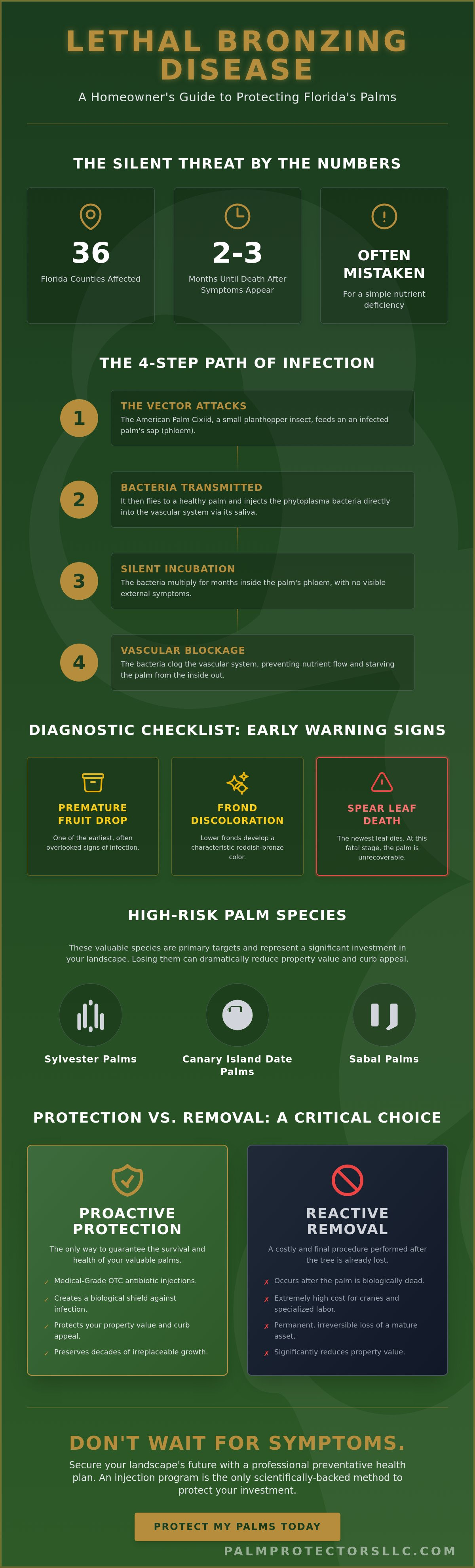
Did you know that Lethal Bronzing Disease has already spread to 36 Florida counties, and once a palm shows symptoms, it's often dead within just two to three months? It's devastating to watch a majestic palm, the cornerstone of your property's curb appeal, begin to brown. Many homeowners initially mistake the bronzing fronds for a simple nutrient deficiency, only to realize too late that they're facing a biological emergency. Implementing professional Lethal Bronzing Disease protection Florida strategies is the only way to safeguard your landscape from this silent killer.
We understand the weight of protecting your investment against an invisible threat. In this expert guide, you'll learn how to accurately diagnose the infection, stop the spread to neighboring trees, and establish a rigorous preventative health plan. We'll examine the mechanics of the palm cixiid vector and the specific antibiotic protocols required to maintain your environment's health. By understanding the science behind the symptoms, you can move from uncertainty to a decisive, defensive path forward. This methodical approach ensures you have the diagnostic tools needed to preserve your vibrant landscape before the damage becomes irreversible.
Key Takeaways
Understand how phytoplasma bacteria colonize the palm's phloem, effectively starving the tree by blocking its vital vascular system.
Implement Lethal Bronzing Disease protection Florida before visual decline begins, as the infection is typically fatal once the spear leaf dies.
Identify early warning signs, such as premature fruit drop and characteristic reddish-bronze discoloration in the lower fronds, to trigger immediate action.
Learn why medical-grade Oxytetracycline hydrochloride (OTC) injections are the industry standard for creating a biological shield around healthy palms.
Protect your property value by choosing the precision of preventative health plans over the high cost and finality of tree removal.
Table of Contents
What is Lethal Bronzing Disease? Florida’s Silent Palm Killer
The Science of Phytoplasma: How LB Destroys Palm Vascular Systems
Preventative Injections vs. Reactive Removal: Choosing Preservation
Diagnostic Checklist: Identifying Symptoms in Tampa Bay Palms
The Palm Protectors LLC Defense: Medical-Grade Trunk Injections
What is Lethal Bronzing Disease? Florida’s Silent Palm Killer
Lethal Bronzing (LB) is a catastrophic biological threat caused by a specialized type of bacteria known as a phytoplasma. Unlike common fungal issues that affect the exterior of a tree, this pathogen lacks a cell wall and colonizes the palm's internal circulatory system. Originally identified as Texas Phoenix Palm Decline (Lethal Bronzing), the disease migrated into Central Florida in 2006 and has since expanded its reach across 36 counties as of July 2025. The progression is relentless. While many homeowners hope for a recovery through standard care, the reality is sobering. Once the infection reaches the palm's apical meristem, or "heart leaf," the tree is biologically dead. The bacteria effectively choke the tree from the inside out, preventing the movement of water and life-sustaining nutrients.
The disease doesn't discriminate among Florida’s most iconic and valuable species. Professional Lethal Bronzing Disease protection Florida strategies are specifically designed to safeguard the following high-risk palms:
Sylvester Palms: Prized for their diamond-cut trunks and blue-green fronds.
Canary Island Date Palms: Massive, slow-growing assets that define luxury landscapes.
Sabal Palms: Florida’s hardy state tree, which is now facing an unprecedented threat.
These mature specimens represent a significant capital investment and years of growth. Losing them often results in a dramatic decline in property value and curb appeal.
The Role of the American Palm Cixiid
The transmission of this phytoplasma relies on a specific insect vector: the American palm cixiid (Haplaxius crudus). This small planthopper feeds on the palm's phloem, injecting the bacteria directly into the tree through its saliva. The danger lies in the "stealth" phase of the infection. A palm can harbor the pathogen for months without showing a single yellowing frond. During this incubation period, the insect can continue to feed and carry the bacteria to every other healthy palm on your property. By the time you notice the characteristic bronzing, the bacteria have already multiplied throughout the vascular system. This makes immediate diagnostic testing and proactive defense the only way to prevent a total landscape loss.
Why Florida Palms are at Extreme Risk
Florida's subtropical climate provides an ideal environment for the American palm cixiid to thrive year-round. In high-density urban landscapes like Tampa and St. Petersburg, palms are often planted in close proximity. This creates a "biological highway" that allows the vector to jump easily from one host to another. This proximity accelerates the spread of the disease across entire neighborhoods in just a single season. Beyond the environmental loss, the economic impact is severe. The cost of removing a massive, dead palm often requires specialized cranes and labor, far exceeding the cost of preventative care. Implementing Lethal Bronzing Disease protection Florida is the only logical path for homeowners who value the long-term health of their mature palm assets.
The Science of Phytoplasma: How LB Destroys Palm Vascular Systems
The palm's phloem serves as its internal circulatory system, transporting essential sugars and nutrients from the fronds down to the roots. When the phytoplasma bacteria enter this system, they multiply rapidly. Because these bacteria lack cell walls, they can easily navigate and colonize the narrow vascular tubes. As the bacterial load increases, it creates a physical blockage. This obstruction prevents the palm from distributing the energy it produces through photosynthesis. Essentially, the tree begins to starve even while it appears to have adequate water and sunlight. This is why Lethal Bronzing Disease protection Florida relies on systemic injections that move through the phloem just as the bacteria do. A surface treatment cannot reach the pathogens sequestered deep within the trunk's vascular tissue.
According to the University of Florida's Lethal Bronzing Guide, the timeline from initial infection to total crown collapse is alarmingly short. Once the vascular system is compromised, the tree enters a state of rapid decline. Most palms will completely succumb within two to three months after the first symptoms appear. This speed makes early detection and immediate intervention the only viable path to preservation.
Systemic Failure: From Roots to Fronds
The earliest visible symptoms typically appear in the oldest, lowest fronds. As the phytoplasma "chokes" the nutrient flow, these fronds are the first to lose their vitality and turn a distinct reddish-bronze. This process is not a slow fade. Environmental factors like the intense Florida heat or periods of drought act as accelerators. When a tree is already struggling to move water through a blocked vascular system, high temperatures increase the demand for hydration that the tree simply cannot meet. This leads to a systemic failure where the palm's health plateaus and then drops sharply. If you suspect your trees are at risk, establishing proactive vascular defense is the only way to bypass this internal blockage and deliver life-saving treatment directly where it's needed.
Lethal Bronzing vs. Lethal Yellowing
While both diseases are caused by phytoplasmas, they are distinct threats. Lethal Yellowing was historically the primary concern in South Florida, but Lethal Bronzing has proven far more aggressive in the Tampa Bay region and across Central Florida. The host range for LB is much broader, affecting species that were previously thought to be resistant to similar diseases. To the untrained eye, the symptoms look similar, but the color is the key diagnostic detail. While Lethal Yellowing produces a pale, straw-colored yellow, Lethal Bronzing results in a deep, burnt-copper or reddish-bronze hue that starts at the tips and moves inward. Securing Lethal Bronzing Disease protection Florida is vital because once this bronze color reaches the spear leaf, the vascular collapse is total and irreversible.
Preventative Injections vs. Reactive Removal: Choosing Preservation
Many property owners fall into the "wait and see" trap, believing they can monitor their palms and act only when symptoms appear. This hesitation is often fatal. Because Lethal Bronzing has an incubation period where the tree remains asymptomatic while harboring the phytoplasma, waiting for visible bronzing means the vascular collapse is already advanced. At that stage, the tree isn't just dying; it's a biological reservoir for the American palm cixiid to spread the infection to every other healthy tree on the property. Professional Lethal Bronzing Disease protection Florida is not a luxury. It's a necessary medical defense for your landscape.
The financial reality of palm management is clear. The cost of a multi-year preventative injection plan is a small fraction of the price of a single reactive removal. Removing a mature, dead palm is a complex industrial operation. It often requires crane-assisted teams and specialized hauling to manage the massive weight and height of species like the Canary Island Date palm. Beyond the immediate invoice for removal, you lose the years of growth and the significant property value that a healthy, mature canopy provides. Choosing preservation is a proactive investment in your property's long-term equity.
The Specialist Advantage: Why General Landscapers Miss the Mark
Standard maintenance crews are trained for aesthetics, not pathology. We frequently see general landscapers misdiagnose the early stages of Lethal Bronzing as a simple potassium or magnesium deficiency. They apply extra fertilizer, which does nothing to stop the bacterial "choking" of the phloem. There is also an inherent conflict of interest when a generalist company profits more from a high-priced removal than from a preservation service. Effective Lethal Bronzing Disease protection Florida requires specialized diagnostic tools and licensed technicians who understand the precision drilling and injection protocols necessary to maintain tree health without causing secondary trauma.
Protecting Your Landscape Investment
A mature Sylvester or Canary Island Date palm can be valued at thousands of dollars. When one tree in a cluster becomes infected, it jeopardizes the entire neighborhood canopy. This is where the concept of "herd immunity" applies to your landscape. By protecting the majority of your palms, you reduce the available host sites for the insect vector. The Florida Forest Service Health Report underscores the widespread impact of this disease across the state, highlighting why preservation is a matter of environmental stewardship. A dedicated protection plan provides the peace of mind that your investment won't vanish in a single season.
Diagnostic Checklist: Identifying Symptoms in Tampa Bay Palms
Accurate diagnosis is the first step in environmental stewardship. Because the symptoms of this phytoplasma infection can mimic other conditions, a disciplined, methodical approach to inspection is necessary. If you own susceptible species in the Tampa Bay region, you must monitor your landscape weekly. The speed of the disease means that a delay of even fourteen days can be the difference between a treatable situation and a total loss. Following a structured diagnostic checklist allows you to identify the threat before the vascular collapse becomes irreversible.
Step 1: Monitor for premature fruit drop. For fruiting species, the sudden dropping of all fruit or flowers out of season is often the first physiological red flag.
Step 2: Inspect the lowest tier of fronds. Look for a distinct reddish-bronze color that begins at the tips and moves toward the trunk. This is not the typical straw-yellow of natural aging.
Step 3: Check the spear leaf. The newest growth at the very top of the palm is the most critical area. If the spear leaf turns brown or collapses, the palm's apical meristem is dead.
Step 4: Obtain PCR testing. Visual symptoms provide a warning, but a Polymerase Chain Reaction (PCR) test is the only way to confirm the presence of the phytoplasma DNA. As of June 2026, the diagnostic fee for this lab test is $75 plus shipping.
Step 5: Implement biological protection. If an infection is confirmed, you must immediately secure Lethal Bronzing Disease protection Florida for every healthy palm within a 100-foot radius to stop the vector's spread.
Lethal Bronzing or Frizzle Top? The Nutrient Deception
Many homeowners in Tampa and St. Petersburg mistake Lethal Bronzing for "Frizzle Top," a common manganese deficiency caused by the region's alkaline soils. Frizzle Top causes the newest fronds to emerge looking tattered, scorched, or "frizzled." In contrast, Lethal Bronzing attacks the oldest fronds first. While Frizzle Top is a chronic health issue that can be corrected with our specialized nutrient and fertilizer treatments, Lethal Bronzing is an acute, fatal infection. You cannot fertilize your way out of a phytoplasma invasion. A professional diagnostic assessment is the only way to distinguish between a simple nutrient deficiency and a terminal disease.
Local Hotspots: Pasco, Pinellas, and Hillsborough Concerns
The high density of Sylvester and Sabal palms in Pasco, Pinellas, and Hillsborough counties has created an environment where the American palm cixiid thrives. In St. Petersburg, sandy coastal soils often lead to higher levels of environmental stress, which can weaken a palm's natural defenses and make it a more attractive target for the insect vector. Residents in these counties should be hyper-vigilant during the peak vector seasons. If you notice any bronze discoloration in your neighborhood, you should schedule a diagnostic inspection immediately. Implementing Lethal Bronzing Disease protection Florida early is the only way to ensure your palms don't become the next statistic in this regional environmental emergency.
The Palm Protectors LLC Defense: Medical-Grade Trunk Injections
The only scientifically validated defense against phytoplasma colonization is the use of Oxytetracycline hydrochloride (OTC). This medical-grade antibiotic acts as a systemic barrier, inhibiting the bacteria's ability to replicate within the tree's vascular tissue. To maintain an effective biological shield, we implement a strict quarterly schedule. Injections must occur every three to four months to ensure the concentration of OTC remains at therapeutic levels throughout the year. Our Lethal Bronzing Disease protection Florida protocol utilizes precision drilling techniques designed to minimize trauma to the trunk. By creating a small, clean access point, we deliver the solution directly into the palm's active vascular layer without compromising its structural integrity. This methodical approach ensures the tree remains healthy while receiving the necessary medicine to ward off infection.
How Systemic Injections Work
Once the solution is introduced into the trunk, the palm's natural transpiration process draws the antibiotic upward through the xylem. This distribution ensures the entire canopy is protected from the moment the American palm cixiid attempts to feed. You should view these injections as a preventative vaccine rather than a curative treatment. If the spear leaf has already collapsed as described in our diagnostic checklist, the vascular damage is too extensive for the antibiotic to be effective. The goal is to protect healthy palms before the pathogen can take hold. By establishing this internal defense, you're effectively creating a biological dead end for the phytoplasma.
Comprehensive Nutrient Management
While injections target the bacteria, our professional fertilizer treatments address the palm's overall vigor. A palm with balanced nutrition possesses a more robust natural immune response, making it less susceptible to the environmental stressors that often accelerate decline. The Palm Protectors LLC approach utilizes custom soil amendments tailored to the specific alkaline conditions found in Tampa Bay's sandy soils. This holistic approach ensures your palms aren't just surviving; they're thriving. Balanced nutrition supports the tree's ability to heal injection sites and maintain the dense, green canopy that defines your property's value.
Next Steps: Securing Your Canopy
Protecting high-value palms requires more than just hardware; it requires the expertise of a licensed and insured specialist who understands the nuances of Florida's environmental threats. General maintenance crews often lack the diagnostic precision required for these medical-grade applications. Don't leave your property value to chance by waiting for symptoms to appear. If you have healthy palms in a known hotspot, the time for defensive action is now. Protect your palms from Lethal Bronzing today and ensure your landscape remains a permanent, vibrant asset for years to come.
Secure Your Landscape’s Future Today
The threat of phytoplasma infection is a biological reality that requires immediate, expert intervention. As we've explored, the American palm cixiid moves with stealth, often leaving a trail of irreversible damage before the first symptoms are even visible. By implementing a rigorous schedule of Lethal Bronzing Disease protection Florida, you move from a position of vulnerability to one of active defense. You understand now that the science of preservation relies on maintaining therapeutic levels of antibiotics within the tree's vascular system while supporting its natural resilience through balanced nutrition.
Our team consists of Licensed, Insured, and Certified Palm Technicians who are dedicated to the health of your environment. We specialize in prevention, not removal, providing focused expertise for homeowners across Tampa, St. Pete, and Pasco County. Don't let your investment become a statistic of regional decline. Get a Professional Palm Health Consultation today to establish a long-term safety plan for your canopy. With the right diagnostic tools and medical-grade protocols, you can ensure your palms remain a vibrant, thriving part of your property for years to come.
Frequently Asked Questions
Can a palm tree recover from Lethal Bronzing once symptoms appear?
Recovery is not possible once the phytoplasma has colonized the apical meristem. If the spear leaf has died or collapsed, the tree is biologically dead. Immediate removal is the only responsible course of action to eliminate the pathogen source from your property and protect the remaining healthy palms in your landscape.
How much does Lethal Bronzing protection cost compared to tree removal?
Preventative Lethal Bronzing Disease protection Florida plans are significantly more cost-effective than the alternative. Tree removal involves specialized machinery and labor-intensive processes that far exceed the price of annual medical defense. You also preserve the thousands of dollars in equity represented by a mature, healthy palm specimen.
Is the antibiotic used in trunk injections safe for my family and pets?
Yes, the antibiotic is safely sequestered within the tree's vascular system. Because we use precision trunk injections, there's no chemical drift, soil runoff, or surface residue. This makes the treatment an ideal choice for residential landscapes where children and pets are present and active around the trees.
How often do palms need to be injected for Lethal Bronzing protection?
Palms require injections every three to four months to maintain a constant biological shield. The antibiotic levels naturally dissipate over time, so a quarterly schedule is essential for continuous suppression of the phytoplasma. Missing even a single application can leave the tree vulnerable to the next insect vector cycle.
Which palm species in Florida are most susceptible to Lethal Bronzing?
While over 21 species are susceptible, the most frequent victims in our region are Sylvester palms, Canary Island Date palms, and Sabal palms. Queen palms and Bismarck palms are also increasingly targeted as the disease expands its host range. Constant vigilance is necessary for any high-value specimen on your property.
Does Lethal Bronzing spread through pruning tools or just insects?
Transmission occurs exclusively through the saliva of the American palm cixiid, a small planthopper. Unlike certain fungal pathogens, the LB phytoplasma isn't known to spread through pruning tools or physical contact. The insect vector is the sole delivery mechanism for this specific, fatal vascular infection.
How do I know if my palm has a nutrient deficiency or Lethal Bronzing?
The location of the discoloration is the primary indicator. Nutrient deficiencies often affect the newest growth or create a mottled yellowing, while Lethal Bronzing causes a uniform reddish-bronze hue starting at the lowest fronds. A professional PCR test is the only definitive way to confirm the presence of the bacteria.
What should I do if my neighbor has a palm tree with Lethal Bronzing?
You must act immediately to secure Lethal Bronzing Disease protection Florida for your own trees. An infected neighbor's palm acts as a biological hub for the insect vector. Once the planthoppers feed on the infected tree, they'll move to the nearest healthy hosts, making your landscape the next target.


Comments