.png)
Lethal Bronzing Treatment in Hillsborough County: Protecting Your Palms

What if the subtle bronze tint on your Sylvester palm isn't a sign of the changing season, but the start of a biological countdown that ends in total tree death? For property owners in the Tampa Bay area, the threat is no longer theoretical. Since its discovery here in 2006, this phytoplasma has claimed thousands of iconic trees across 36 Florida counties. You've likely invested significant capital into your mature Sabal or Sylvester palms, and it's stressful to watch them decline while wondering if a general landscaper even has the diagnostic tools to help. Seeking a specialized lethal bronzing treatment Hillsborough County protocol is the only way to halt a spread that moves faster than most homeowners realize.
We understand the fear of losing your landscape's centerpiece to a disease that looks deceptively like natural aging. You deserve a clear diagnostic path and a prevention plan that actually works. This article outlines how to identify the early warning signs, such as premature fruit drop, and explains the critical preventative protocols required to protect your healthy palms. We'll walk through the University of Florida's recommended injection schedule and the specific steps you must take to preserve your property's value and canopy aesthetics before the damage becomes irreversible.
Key Takeaways
Identify the "fruit drop" phenomenon as the earliest diagnostic indicator, allowing for professional intervention before visible canopy bronzing occurs.
Distinguish between nutrient-based Frizzle Top and the fatal phytoplasma of Lethal Bronzing to ensure your palms receive the correct biological defense.
Apply a preventative lethal bronzing treatment Hillsborough County schedule using trunk injections to safeguard high-value palms from the region's most aggressive environmental threat.
Establish a quarterly injection protocol following University of Florida standards to provide continuous protection against the palm cixiid vector.
Understand the finality of spear leaf collapse, a symptom that signals the death of the palm's heart and the end of all viable treatment options.
Table of Contents
Understanding Lethal Bronzing Disease in Hillsborough County
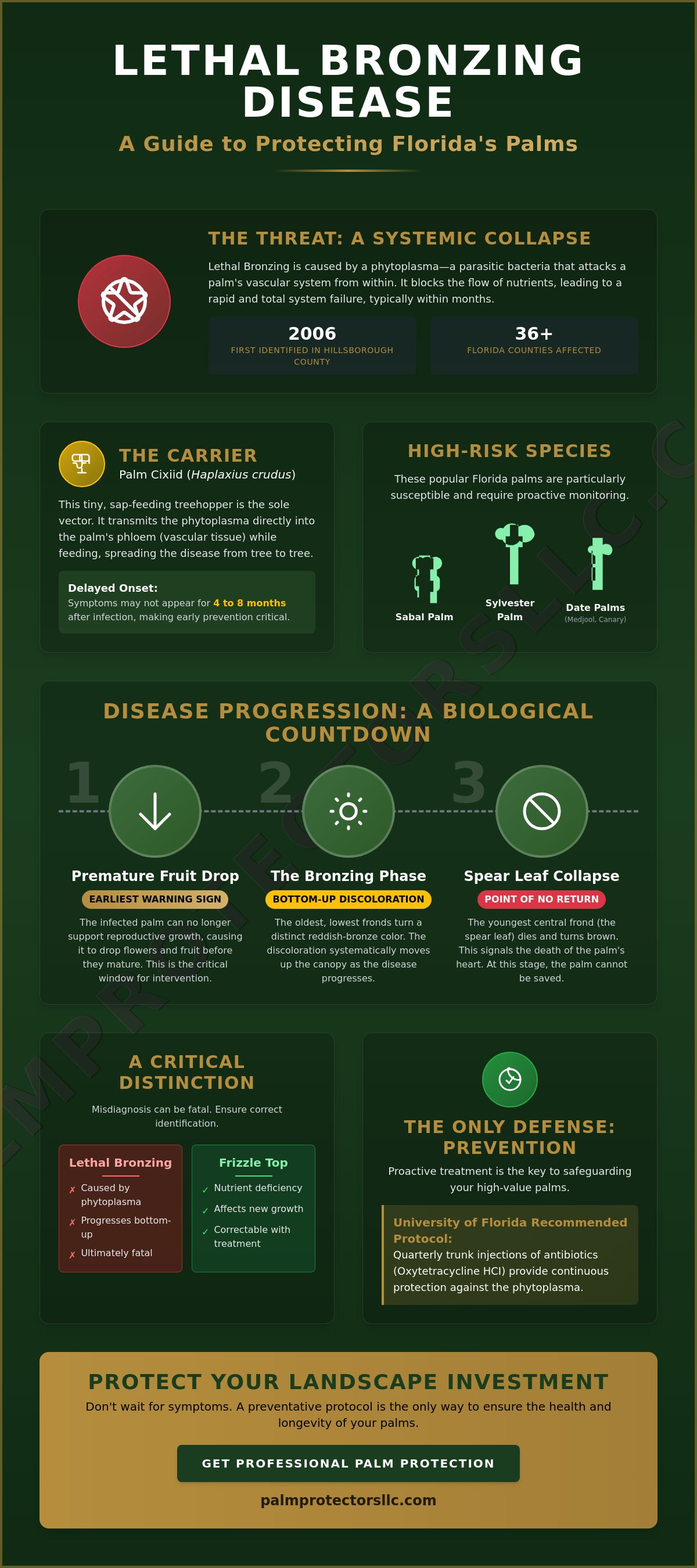
Hillsborough County holds a somber distinction in the history of Florida’s arboriculture. It was here, in 2006, that Lethal Bronzing Disease (LBD) was first identified before spreading to more than 36 counties across the state. This condition is caused by a phytoplasma, a specialized type of bacteria without cell walls that acts as an internal parasite. Unlike many fungal infections that affect the exterior of the trunk or fronds, LBD attacks the palm's vascular system directly. It's classified as "lethal" because it triggers a total systemic collapse. Once the bacteria colonize the tree’s circulatory tissue, they block the flow of essential nutrients, leading to death within months.
As we move through 2026, the outlook for palm health in Tampa, Brandon, and Riverview remains critical. Recent data spanning 2017 to 2024 confirms a distinct seasonal pattern, with infection detections peaking between January and May. For local property owners, this means the biological pressure is highest during the spring months. Securing a professional lethal bronzing treatment Hillsborough County protocol is no longer a luxury; it's a necessary defensive measure for anyone managing mature, high-value palms. Without intervention, an infected tree becomes a reservoir for the disease, endangering every other susceptible palm in the neighborhood.
The Science of Transmission: The Palm Cixiid
The spread of this phytoplasma isn't accidental or airborne. It relies entirely on a microscopic courier: the palm cixiid (Haplaxius crudus). This small, sap-feeding insect, often called a treehopper, serves as the primary vector. The transmission occurs through phloem feeding. As the insect moves from an infected palm to a healthy one, it injects the bacteria directly into the tree's "bloodstream" while seeking nutrients. These insects are notoriously difficult to spot because they camouflage perfectly within the high canopy of Hillsborough palms. While vector populations typically peak in September, the resulting infections often don't manifest until four to eight months later, creating a delayed wave of decline that catches many owners off guard.
Susceptible Species in the Tampa Bay Landscape
While the disease can infect at least 21 different species, certain palms in our local landscape are high-risk targets. The Sylvester palm (Phoenix sylvestris) and the iconic Sabal palm are particularly vulnerable. In many Hillsborough communities, Sylvester palms act as "sentinel" trees; they're often the first to show symptoms, providing a grim warning for nearby Medjool and Canary Island Date Palms. Because these species represent a significant financial and aesthetic investment, identifying your property's most vulnerable specimens is the first step in a proactive defense plan. If you own any of these species, you're managing a high-risk asset that requires specialized diagnostic monitoring.
Identifying the Symptoms: Is Your Palm in Danger?
The first warning sign of an infection isn't the characteristic color change that gives the disease its name. Instead, it's a phenomenon known as "fruit drop." If you notice your palm dropping an abundance of flowers or fruit prematurely, it's a critical red flag. This happens because the phytoplasma has already begun to obstruct the tree's vascular system, preventing it from supporting reproductive growth. While many homeowners mistake this for a messy seasonal cycle, it's actually the earliest diagnostic window for seeking a lethal bronzing treatment Hillsborough County specialist to evaluate the tree's health.
Once the fruit has fallen, the disease moves into the "bronzing" phase. This discoloration follows a predictable, bottom-up progression. The oldest, lowest fronds turn a distinct reddish-bronze hue first, while the younger, upper fronds remain green. This is a biological countdown. As the bacteria colonize the phloem, the bronzing marches steadily toward the top of the canopy. According to research on Lethal Bronzing in Florida, the final stage is spear leaf collapse. When the youngest, central frond turns brown and dies, the palm's "heart" has perished. At this point, the tree is biologically dead and cannot be saved.
Visual Markers of Phytoplasma Infection
Distinguishing between disease and natural aging requires a trained eye. Natural senescence typically results in fronds turning a dull, grayish-brown as they dry out. In contrast, the bronzing caused by LBD is often more intense and vibrant, appearing almost like a deep rust color. It's also more aggressive than typical drought stress, which usually affects the entire canopy simultaneously. You should pay close attention to the spear leaf; if the rest of the canopy looks healthy but the center leaf is flagging, the infection has reached the palm's growth point.
The Diagnostic Challenge in Mature Palms
Monitoring mature Sylvester or Sabal palms in Hillsborough County presents a unique challenge due to their height. It's often impossible to see the condition of the spear leaf or the early stages of fruit drop from the ground. Because visual symptoms only appear after the bacteria have significantly colonized the tree, relying on sight alone is risky. Accurate confirmation requires DNA testing, specifically a Polymerase Chain Reaction (PCR) test. Palm Protectors LLC utilizes these specialized diagnostic screenings to detect the phytoplasma's genetic material before the canopy collapses. This scientific approach removes the guesswork that often leads to the preventable loss of high-value landscape assets.
Lethal Bronzing vs. Frizzle Top: A Critical Distinction
Homeowners often look at a declining palm and assume it simply needs a boost of fertilizer. In our region, this assumption is frequently linked to "Frizzle Top," a chronic manganese deficiency prevalent in Hillsborough soil. The high pH levels found in coastal and suburban Tampa environments create a biological "nutrient lock." This prevents palms from absorbing manganese even if it's present in the ground. Because Frizzle Top is so common, many property owners fall into a dangerous diagnostic trap. They treat for a deficiency while a fatal infection quietly colonizes the tree's vascular system. Mistaking these two issues is a costly error; treating a tree for a nutrient lack when it actually requires a lethal bronzing treatment Hillsborough County protocol leads to irreversible loss.
The distinction lies in where the damage begins and how it manifests. Frizzle Top is a deformity of new growth, whereas Lethal Bronzing is a death sentence for old growth. If you misidentify the symptoms, you lose the window of opportunity for preventative action. You must understand that while a nutrient deficiency is a health setback, a phytoplasma infection is a biological emergency. Fertilizer alone cannot stop the spread of bacteria. By the time many owners realize their general "palm food" isn't working, the tree's heart has already perished.
Nutrient Deficiency Signs (Frizzle Top)
Frizzle Top targets the youngest fronds at the very top of the canopy. As new leaves emerge, they appear yellow, stunted, and eventually develop necrotic streaks. The leaflets often look scorched, curled, or "frizzled," which gives the condition its name. This is a progressive decline, but it's rarely immediate. Because this is a chemical imbalance rather than a disease, the tree can often be salvaged. Implementing targeted Frizzle Top treatments can bypass soil lock-up issues by delivering the necessary minerals directly to the palm's system, restoring vigor to the new growth over several months.
Disease Progression Signs (Lethal Bronzing)
Lethal Bronzing operates with a much more aggressive timeline. As detailed in this Lethal Bronzing Disease guide, the infection triggers the rapid death of the oldest, lowest fronds first. This reddish-bronze discoloration moves upward like a rising tide. A hallmark of this disease is that the spear leaf will die while the middle of the canopy still appears deceptively green. If you see bronzing at the bottom and a collapsed spear leaf at the top, but the fronds themselves aren't physically "frizzled" or stunted, you aren't dealing with a soil issue. You're facing an active pathogen. In these cases, a specialized lethal bronzing treatment Hillsborough County plan is the only way to protect the remaining healthy palms on your property.
The Preventative Protocol: Trunk Injections and Timing
Lethal Bronzing isn't a condition that can be managed with topical sprays or simple soil drenches. Because the phytoplasma resides deep within the tree's vascular tissue, specifically the phloem, the defense must be internal. For property owners in our region, the most effective lethal bronzing treatment Hillsborough County can provide is a systemic antibiotic protocol. This method bypasses the bark and exterior defenses, delivering medicine directly into the channels where the bacteria multiply and cause blockages. Without this internal barrier, a healthy palm remains an open target for the palm cixiid vector.
Proper injection site management is paramount to the long-term health of the palm. Drilling into a trunk creates a wound, and if the procedure isn't executed with precision, you risk introducing secondary fungal pathogens or causing structural decay. Specialists use precise measurements to ensure the injection port is sealed and the tree can compartmentalize the site effectively. This professional approach prevents the "medical intervention" from becoming a new source of stress for an already vulnerable tree.
How Trunk Injections Work
The science behind this protocol relies on the tree's natural transpiration process. As the palm pulls water from its roots to its canopy, it simultaneously carries the injected antibiotic upward. Oxytetracycline hydrochloride (OTC) is the only validated suppression method for this specific phytoplasma. To ensure the medicine reaches the entire canopy, specialists use pressure-regulated injection tools. These devices maintain a consistent flow rate, ensuring the OTC saturates the vascular system without damaging the delicate internal fibers of the trunk.
The Critical Treatment Window
Timing is the most decisive factor in palm preservation. Once an infection reaches the growth point and the spear leaf dies, the palm's heart has perished; at this stage, any investment in treatment is a total loss. To prevent this, the University of Florida recommends a strict quarterly injection schedule. Maintaining this 90-day cycle ensures that the concentration of OTC in the phloem remains high enough to suppress any bacteria introduced by feeding insects. This is especially vital in Florida’s humid climate, where biological threats remain active year-round.
In neighborhoods where LBD has already been confirmed, we focus on creating a "buffer zone." This involves treating every healthy, susceptible palm within a 100-foot radius of an infected tree. This proactive strategy stops the local spread by ensuring the insect vectors cannot find a viable host to continue the infection cycle. If your property is near a confirmed case, the window for action is closing. You can secure your high-risk palms by establishing a professional injection schedule today.
Professional Palm Protection with Palm Protectors LLC
General landscapers are equipped for aesthetic maintenance, but they often lack the diagnostic sophistication required to manage a biological crisis. At Palm Protectors LLC, we operate as niche specialists in palm medicine. Our approach isn't about mowing lawns; it's about preserving the biological integrity of your property's most valuable natural assets. For those seeking a lethal bronzing treatment Hillsborough County specialist, we offer a level of scientific rigor that generalist crews simply cannot match. We develop customized health plans for residential and commercial properties throughout Tampa, Brandon, and Riverview, ensuring each tree receives a diagnostic screening before any intervention begins.
The necessity for immediate action in the Tampa Bay area can't be overstated. Because this phytoplasma moves with such finality, waiting for visible symptoms usually means waiting for a tree to die. Our proactive guardianship model identifies risks before they manifest as canopy collapse. We focus on long-term preservation, treating each palm as a living investment that requires precise, medical-grade care. Whether you're managing a single specimen in Tampa or a large commercial grove in St. Pete, the biological pressure from the palm cixiid remains a constant threat that demands a professional response.
Beyond Injections: Comprehensive Nutrient Management
Effective defense requires more than just a single antibiotic dose. We integrate Lethal Bronzing protection with professional fertilization to address the unique soil profile of Hillsborough County. As established earlier, our local soil's high pH often locks out essential minerals like manganese. By combining antibiotic protocols with targeted nutrient management, we strengthen the palm's natural immune response. This comprehensive strategy also includes monitoring for secondary pests and environmental stressors that could weaken the tree and make it a more attractive target for disease vectors.
Secure Your Landscape Legacy
The financial logic of prevention is undeniable. The cost of removing a mature, dead Sylvester or Medjool palm in Hillsborough County far exceeds the investment in a multi-year preventative plan. Beyond the dollar value, there is the aesthetic loss of a landscape legacy that took decades to grow. Our commitment is to the preservation of Florida’s iconic canopy through science-based medicine. Don't leave your property's health to chance or to a generalist who doesn't understand the pathology of this disease. Contact our certified technicians for a diagnostic consultation today to ensure your palms remain a vibrant part of your landscape for years to come.
Secure the Future of Your Florida Landscape
The biological threat to your Sylvester and Sabal palms is persistent, but it's not unmanageable. Success relies on moving beyond reactive maintenance and embracing proactive stewardship. By recognizing the critical diagnostic window of fruit drop and distinguishing these symptoms from common nutrient deficiencies like Frizzle Top, you can intervene before the vascular system reaches a point of total collapse. Implementing a consistent lethal bronzing treatment Hillsborough County protocol is the most effective way to ensure your high-value trees remain a vibrant, healthy part of your property for decades to come.
Professional intervention remains the only validated method to maintain a systemic defensive barrier against the palm cixiid vector. Our Certified Palm Health Technicians specialize in Lethal Bronzing prevention, providing scientifically backed diagnostic care across Tampa, Pasco, and Pinellas Counties. We're dedicated to preserving the iconic canopy that defines our Florida region and your home's aesthetic value. Protect your palms from Lethal Bronzing; schedule a specialist consultation today. Your landscape's health is a legacy worth protecting, and we're here to help you defend it.
Frequently Asked Questions
Is there a cure for Lethal Bronzing once a palm is infected?
No, there's no cure for Lethal Bronzing once the infection has colonized the palm's vascular system. The phytoplasma causes total blockage of the phloem, leading to rapid systemic collapse. Once a tree shows advanced symptoms like spear leaf death, it's biologically dead and must be removed to prevent it from serving as a reservoir for the disease vector.
How much does Lethal Bronzing treatment cost in Hillsborough County?
The cost for a lethal bronzing treatment Hillsborough County plan depends on several factors, including the total number of trees and their trunk diameter. Professional services are structured as a recurring quarterly protocol to ensure the antibiotic remains at therapeutic levels. Because this requires specialized equipment and medical-grade antibiotics, property owners should request a custom diagnostic quote to determine their specific investment.
Can Lethal Bronzing spread to my other non-palm trees or plants?
No, this disease is host-specific and doesn't spread to non-palm plants or hardwood trees. It currently affects at least 21 palm species, including the Sylvester and Sabal palms common in Tampa. While your oaks and shrubs are safe, the presence of an infected palm on your property creates a significant biological risk for every other palm in the vicinity.
How often do I need to have my palms injected for protection?
You must have your palms injected every three months to maintain a consistent defensive barrier. This quarterly schedule follows the University of Florida's validated protocol for suppressing the phytoplasma bacteria. Because the antibiotic naturally dissipates over time, maintaining this strict 90-day cycle is the only way to ensure your trees are protected during peak insect vector seasons.
What should I do if my neighbor has a palm with Lethal Bronzing?
You should immediately initiate a preventative injection program for your own palms to create a biological buffer. The palm cixiid insect can easily carry the bacteria from your neighbor's tree to yours. Since you can't control the health of neighboring landscapes, professional intervention is the only way to safeguard your property's mature palm investment.
Can I perform palm trunk injections myself with store-bought kits?
While some homeowners attempt DIY injections, this approach is often less effective than professional medical-grade protocols. Specialized pressure-regulated tools are required to ensure the antibiotic saturates the entire vascular system without causing structural damage to the trunk. Improper drilling techniques can also introduce secondary fungal infections, which can be just as destructive as the disease itself.
Does the city of Tampa or Hillsborough County provide removal for infected trees?
No, local municipalities like the City of Tampa don't provide removal services for diseased palms on private land. Homeowners are responsible for the disposal of infected trees. Because mature palm removal is expensive and labor-intensive, investing in a professional lethal bronzing treatment Hillsborough County plan is the most cost-effective way to manage your landscape's health.
How do I know if my Sylvester palm has Lethal Bronzing or just needs fertilizer?
Identify the location of the discoloration to determine the cause. Lethal Bronzing typically starts with the oldest, lowest fronds and often includes premature fruit drop. In contrast, a nutrient deficiency like Frizzle Top manifests as stunted, yellowing new growth at the very top of the canopy. If the center spear leaf dies while the middle fronds are still green, it's likely an infection.


Comments