.png)
Palm Tree Disease Control in Tampa: 5 Lethal Myths Debunked

If you're waiting for your Sylvester palm to turn brown before calling a specialist, you've likely already signed its death warrant. It's a sobering reality for Florida property owners, but the traditional "wait and see" approach is the fastest way to lose a prized canopy. You've invested significant resources into your landscape, and it's natural to believe that routine pruning or basic watering will keep your trees healthy. However, effective palm tree disease control Tampa requires a shift from aesthetic maintenance to rigorous biological defense. When it comes to aggressive pathogens like Lethal Bronzing, a palm that looks slightly "off" today could be biologically dead within weeks.
This article exposes five lethal myths that are currently leading to the preventable decline of Tampa's iconic palms. We'll move past common landscaping misconceptions to uncover the critical biological truths about nutrient deficiencies and systemic infections. By understanding the mechanics of transmission and the specific needs of specimen palms like the Canary Island Date, you can move from reactive worry to proactive protection. We'll preview the diagnostic steps necessary to restore vigor and explain why specialized tree medicine is your only defense against irreversible loss.
Key Takeaways
Learn why waiting for visible symptoms often means the infection has already reached a terminal stage within the palm's vascular system.
Identify the critical visual differences between fatal Lethal Bronzing and treatable nutrient deficiencies like Frizzle Top.
Discover how general landscaping practices and unsterilized tools can inadvertently spread pathogens across your entire canopy.
Implement a proactive strategy for palm tree disease control Tampa that prioritizes early diagnostic screening over reactive removal.
Understand the 3-step defense protocol required to preserve high-value specimen palms and maintain the structural integrity of your landscape.
Table of Contents
The "Wait and See" Myth: Why Tampa Palm Disease Control Can’t Wait
Many homeowners view palm maintenance as a simple matter of aesthetic grooming. They believe that as long as the canopy looks green, the tree is healthy. This assumption is a dangerous misconception. Effective palm tree disease control Tampa is not a branch of general landscaping; it is a specialized diagnostic science. Waiting for a visible decline before seeking professional intervention is often a terminal mistake. In the world of plant pathology, symptoms are a lagging indicator. By the time a palm displays browning fronds or a drooping canopy, the internal biological damage is usually advanced. Palm Protectors LLC operates as a vigilant guardian for these iconic trees, recognizing that preservation requires a defensive posture long before the first leaf turns.
The Biological Point of No Return
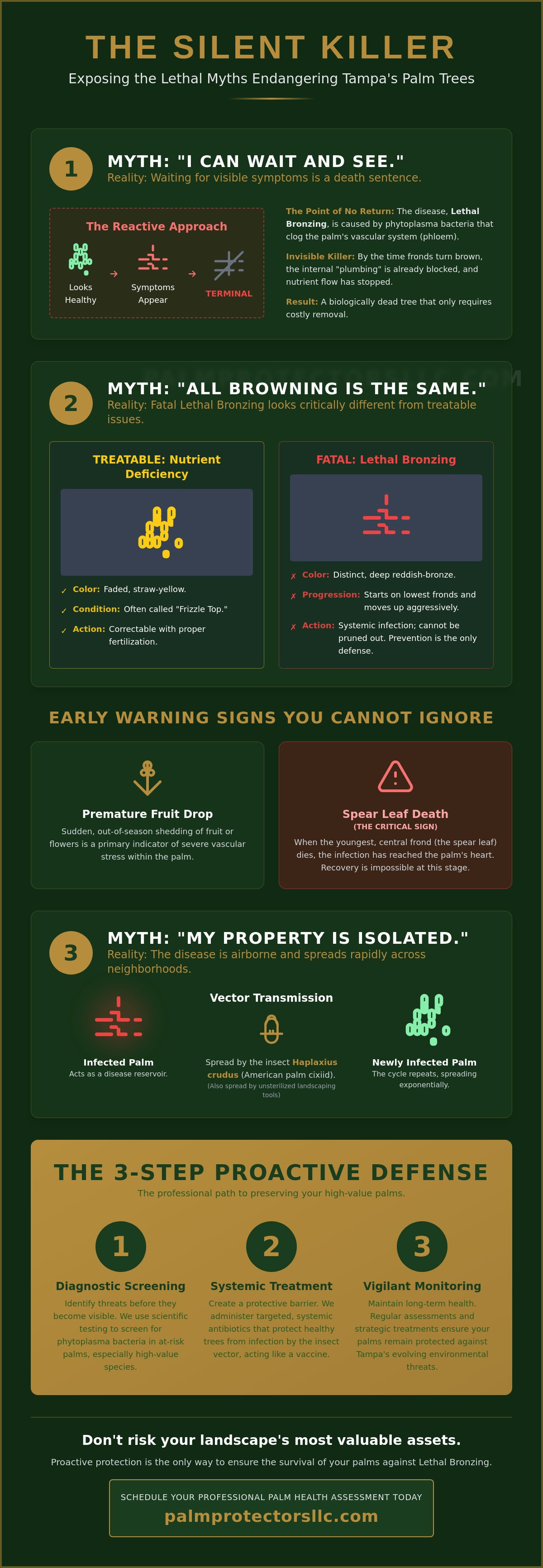
The primary threat to our local canopy is a microscopic bacterium known as phytoplasma. This pathogen colonizes the vascular system of the tree, specifically the phloem, which is responsible for transporting vital nutrients. As the bacteria multiply, they physically block the flow of life-sustaining fluids. This process happens entirely out of sight. For species like the Sylvester palm, the tree may appear vibrant while its internal "plumbing" is being systematically dismantled. This specific infection is often referred to as Texas Phoenix Palm Decline (Lethal Bronzing). Once the infection reaches the heart of the palm, the crown begins to rot from the inside out. Lethal Bronzing is a systemic, fatal infection with no known cure once the spear leaf dies. Because there is no recovery after this point, "waiting for green" is a strategy that leads only to removal costs.
Why Tampa is Ground Zero in 2026
The risk profile for Hillsborough County has shifted dramatically. In 2026, Tampa stands as a high-risk zone for rapid disease transmission due to a combination of environmental factors and high host density. The disease is spread by a small insect called Haplaxius crudus, or the American palm cixiid. These planthoppers move effortlessly between properties, carrying the phytoplasma from infected trees to healthy ones. Tampa neighborhoods are particularly vulnerable because they feature a high concentration of susceptible species, including the Canary Island Date Palm and the Cabbage Palm. When one tree in a neighborhood becomes infected, it acts as a reservoir for the entire area. Immediate screening is essential for properties with these high-value specimens. Proactive palm tree disease control Tampa focuses on creating a protective barrier through systemic treatments, ensuring that your investment doesn't become the next statistic in an ongoing environmental crisis.
Myth: "Lethal Bronzing is Just Old Age or Freeze Damage"
Dismissing a browning palm as a victim of last season's cold snap or simple old age is a high-stakes gamble that often results in the loss of the entire tree. In the local climate, browning is rarely just a cosmetic issue. While common nutrient deficiencies often manifest as a faded, straw-yellow color, Lethal Bronzing Disease in Florida produces a distinct, deep reddish-bronze hue. This discoloration typically begins at the lowest, oldest fronds and marches upward with aggressive speed. Many property owners attempt to "prune out" the problem, believing that removing the unsightly leaves will halt the decline. This is biologically impossible. Because the pathogen is systemic, it lives within the tree's vascular tissue. Pruning is merely an aesthetic mask for a terminal internal crisis. Establishing a protocol for Lethal Bronzing Disease protection Florida is the only scientifically sound method to safeguard your landscape before these symptoms even appear.
Diagnostic Signs of Lethal Bronzing
Early detection requires a trained eye for specific biological "tells" that occur before the canopy collapses. One of the most overlooked indicators is premature fruit drop. If your palm is shedding its fruit or flowers suddenly and out of season, it's often a sign of vascular stress. The "Spear Leaf" test remains the most critical warning sign. The spear leaf is the youngest, central leaf that has not yet expanded. If this leaf turns brown or collapses while the rest of the canopy still appears green, the tree has reached a terminal stage. At this point, the heart of the palm is rotting. Identifying the specific bronze hue, which looks more like a burnt orange than a natural yellow, is essential for separating a treatable deficiency from a fatal infection.
Lethal Yellowing vs. Lethal Bronzing
It's vital to distinguish between Lethal Yellowing (LY) and Lethal Bronzing (LBD). While they share similar mechanisms, LBD is significantly more dangerous to the Tampa canopy because it attacks a much wider range of species. This includes our native Sabal palmetto, which was once thought to be more resilient. The scientific community has shifted from the older "Texas Phoenix Palm Decline" classification to the current LBD terminology to reflect its broader impact. In 2026, professional palm tree disease control Tampa utilizes advanced diagnostic tools that allow for DNA testing of trunk tissue. By extracting a small core sample, we can confirm the presence of phytoplasma with 100% accuracy before the tree becomes a source of infection for your entire property. If you suspect your trees are at risk, a specialized palm health assessment can provide the clarity needed to prevent a total landscape loss.
Myth: "My Landscaper Handles My Palm Disease Control"
Entrusting the biological health of a specimen palm to a general landscaping crew is a common but often fatal mistake. While these teams excel at turf management and aesthetic trimming, they lack the specialized pathological training required for effective palm tree disease control Tampa. There is a fundamental difference between "aesthetic pruning" and "pathological intervention." Most landscaping equipment, such as chainsaws and pole saws, is rarely sterilized between properties. This creates a mechanical vector for disease. When a crew moves from an infected property to yours, microscopic pathogens clinging to their blades can be introduced directly into your tree's vascular system through fresh pruning cuts.
True palm health requires specific certifications for the handling and application of systemic antibiotics and insecticides. These are not standard tools for a lawn maintenance company. Palm Protectors LLC operates as the niche specialist that professional landscapers often call when they recognize a decline they cannot treat. We focus strictly on the science of preservation, ensuring that every intervention is based on diagnostic data rather than just visual preference.
The Danger of Unsterilized Tools
Pathogens are frequently transferred by uninformed crews who prioritize speed over sanitation. According to the University of Florida's Lethal Bronzing Disease Profile, the management of these infections requires strict tool hygiene that most generalists ignore. Another prevalent issue is the "Hurricane Cut." This practice of over-pruning green fronds removes the tree's primary source of energy and creates significant physiological stress. This weakened state makes the palm far more susceptible to pest infestations and environmental pathogens. Homeowners should verify their service provider by asking three key questions:
Do you use a 10% bleach solution or commercial disinfectant to sterilize tools between every single tree?
Are you licensed for systemic trunk injections of Oxytetracycline?
Can you identify the specific symptoms of phytoplasma versus simple potassium deficiency?
Specialized Trunk Injections vs. Topical Sprays
Effective defense against Lethal Bronzing can't be achieved through topical sprays or soil drenches alone. Because the bacteria reside deep within the phloem, we must use systemic trunk injections to deliver protection directly into the tree's internal circulation. Think of this as the difference between a vitamin and medicine. While a general fertilizer treatment provides essential nutrients, a specialized Lethal Bronzing Disease Protection Service acts as a medical intervention. Topical applications are often washed away by Tampa's heavy rains, but a trunk injection ensures the protective agents remain active within the tree. Our focus remains solely on these advanced medical treatments, leaving the mowing and trimming to others while we act as the primary defenders of your canopy's health.
Myth: "Yellow Fronds Always Mean the Palm is Dying"
While the previous sections established the terminal nature of phytoplasma infections, not every yellowing leaf indicates a death sentence. Homeowners often experience a sense of panic when they see discoloration, assuming the worst for their landscape. However, distinguishing between a systemic infection and a treatable nutritional crisis is the cornerstone of effective palm tree disease control Tampa. Many property owners lose expensive specimens simply because they couldn't tell the difference between a fatal disease and a fixable mineral deficiency. In many cases, what looks like a dying tree is actually a palm crying out for specific biological support.
A diagnostic approach allows us to identify the underlying cause of the yellowing. We look for the location of the symptoms within the canopy to determine the path forward. Unlike the rapid, upward march of Lethal Bronzing, nutrient deficiencies often follow a more predictable and localized pattern. By understanding the soil chemistry of Hillsborough County, we can often reverse the decline and restore the tree's natural vigor through targeted medical intervention.
Identifying and Treating Frizzle Top
Manganese deficiency, commonly known as "Frizzle Top," is a frequent emergency in the alkaline soils of the Tampa Bay area. High soil pH levels often lock up essential Manganese, making it biologically unavailable to the tree. This condition produces a "scorched" or tattered look on the newest growth emerging from the top of the canopy. The fronds may appear stunted, chlorotic, and physically frayed as they unfurl. If left untreated, the deficiency will eventually cause the bud to rot, leading to the death of the tree. However, because this is a nutritional issue rather than a pathogen, we can often save the palm. We utilize a specialized Frizzle Top Treatment that delivers high-grade Manganese directly to the vascular system or the root zone, bypassing the soil's pH barriers to provide immediate relief.
The "Any Fertilizer Will Do" Fallacy
Many property owners believe that a standard bag of generic fertilizer from a big-box retailer is sufficient for palm health. This is a dangerous assumption. Most retail products lack the precise Potassium-to-Magnesium ratio required for Florida’s unique geology. Even more hazardous is the application of high-nitrogen turf fertilizer near the base of a palm. Nitrogen-heavy formulas designed for grass can induce severe nutrient imbalances in palms, effectively starving the tree of essential minerals while forcing unhealthy, weak growth spurts. This imbalance weakens the tree's natural immune system, making it a prime target for pests and secondary infections. Palm Protectors LLC uses professional-grade, slow-release formulas tailored specifically for the biological requirements of Florida palms. These treatments ensure your trees receive a balanced diet of macro and micro-nutrients without the risk of chemical burnout or induced deficiency.
If your palm's new growth appears tattered or scorched, securing a professional palm health assessment is the only way to reverse the decline before the bud is permanently damaged.
Preserving the Tampa Canopy: The Professional Path Forward
The biological reality of the Tampa Bay area dictates that a reactive approach will eventually lead to the removal of your most prized specimens. Protecting these assets requires a transition from passive observation to active stewardship. Effective palm tree disease control Tampa is built upon a foundation of preventative care rather than emergency salvage. Once the vascular system of a palm is compromised by phytoplasma, the window for intervention closes permanently. By the time the canopy collapses, the opportunity for a cure has already passed. A professional defense strategy ensures that high-value palms, such as the Sylvester or Canary Island Date, remain resilient against the specific environmental pressures of the Gulf Coast.
Our methodology follows a disciplined 3-step defense protocol designed to safeguard the structural and biological integrity of your landscape:
Diagnostic Screening: Establishing a baseline of health through trunk tissue analysis and visual assessments to identify latent infections before they manifest.
Nutrient Management: Utilizing professional-grade, slow-release formulas to correct the mineral imbalances common in Florida's alkaline soils.
LBD Protection: Implementing a Lethal Bronzing Disease Protection Service that uses systemic injections to block pathogens from colonizing the tree's vascular tissue.
The Cost of Inaction
Neglect is expensive. Property owners often hesitate at the cost of a preventative program, yet the financial burden of removal and replacement is significantly higher. Replacing a mature, specimen-grade Sylvester palm can easily exceed $5,000 when factoring in the cost of the tree, crane-assisted installation, and the removal of the dead stump. Beyond the financial loss, an infected tree creates a "neighbor effect." Because the insects that carry Lethal Bronzing move freely across property lines, one untreated tree can threaten every palm on the street. Investing in a certified, insured specialist provides the peace of mind that your landscape is a fortress, not a reservoir for disease.
Your First Step: A Professional Diagnostic Screening
A consultation with Palm Protectors LLC is the first line of defense for your property. During this screening, we evaluate the specific risk factors for your trees, including species susceptibility and proximity to known infection sites. We provide baseline health monitoring that is essential for commercial properties and residential estates where the canopy defines the property's value. We serve as the vigilant guardians for landscapes across Tampa, Pasco, and Pinellas, focusing strictly on the science of preservation. Don't wait for the first leaf to turn bronze. Protect your palms with Tampa’s specialized disease experts and ensure the long-term vigor of your iconic Florida canopy.
Defending Your Landscape Against Biological Decline
The survival of your property’s most valuable specimens depends on moving past common myths and embracing a diagnostic approach to tree health. The distinction between a fatal infection and a manageable nutrient deficiency is often invisible to the untrained eye. Effective palm tree disease control Tampa is a matter of proactive science, not reactive grooming. By prioritizing tool sterilization and systemic protection, you prevent your landscape from becoming another statistic in the spread of Lethal Bronzing across Hillsborough County.
Palm Protectors LLC provides the specialized defense your trees require. Our Certified Palm Health Technicians offer Specialized Lethal Bronzing Protection and targeted treatments for conditions like Frizzle Top. We are proud to serve residents and commercial property owners throughout Tampa, Pasco, and Pinellas Counties. Secure your palms with a professional health consultation today. Your canopy is a legacy worth preserving, and it’s never too early to start a defensive protocol that ensures its vitality for years to come.
Frequently Asked Questions
Is there a cure for Lethal Bronzing Disease in Tampa?
There is no biological cure for Lethal Bronzing once the infection reaches the palm's heart and kills the spear leaf. Because the phytoplasma bacteria systematically dismantle the tree's vascular system, the only effective management strategy is prevention. Once the central leaf collapses, the tree becomes a reservoir for the disease and must be removed to protect the surrounding canopy from further transmission via planthoppers.
How can I tell the difference between cold damage and palm disease?
Cold damage typically manifests as uniform browning on the outer frond tips immediately following a frost event, while palm tree disease control Tampa diagnostics look for a deep bronze hue that starts at the oldest leaves and moves upward. Disease often affects specific parts of the tree, such as the spear leaf or fruit, regardless of the temperature. If the browning continues to spread during the warm season, it's a sign of a pathological issue.
What is "Frizzle Top" and can my palm be saved?
Frizzle Top is a treatable Manganese deficiency that causes new fronds to appear scorched, stunted, and tattered as they emerge. Unlike fatal diseases, this condition can often be reversed with a specialized Frizzle Top Treatment that delivers concentrated micro-nutrients directly to the palm's vascular system. If we intervene before the bud rots, the tree can regain its full vigor and structural integrity within one to two growing cycles.
How often do palms in Florida need professional disease treatments?
High-value specimen palms in Florida generally require professional treatments every three to four months to maintain effective protection against aggressive pathogens. This quarterly schedule ensures that systemic antibiotics and insecticides remain at therapeutic levels within the tree's circulation. Regular monitoring also allows for the early detection of nutrient imbalances, preventing minor deficiencies from escalating into terminal health crises that require expensive removal.
Can my landscaper provide the same disease control as a specialist?
General landscapers focus on aesthetic maintenance, but they lack the specialized diagnostic tools and pathological certifications required for effective palm tree disease control Tampa. Landscaping crews often inadvertently spread diseases through unsterilized pruning equipment like chainsaws. Specialists use medical-grade trunk injections and tailored slow-release fertilizers that are far more effective than the generic topical applications or retail products used by most lawn crews.
What palm species in Tampa are most at risk for Lethal Bronzing?
The species most vulnerable to Lethal Bronzing in the Tampa Bay area include the Sylvester palm, the Canary Island Date palm, and the native Sabal palmetto. Other susceptible varieties include Queen palms and Bismarck palms. Because these trees are often the focal points of high-end landscapes, their loss can significantly impact property value. Proactive screening is critical for any property featuring these specific species in Hillsborough County.
What are the first signs that my palm tree is starving for nutrients?
The earliest indicators of nutrient starvation include a subtle fading of the vibrant green color and a noticeable slowdown in new frond production. You might see yellowing on the oldest fronds or a "frizzed" appearance on the newest growth. These symptoms signify that the palm's vascular system is struggling to transport essential minerals like Potassium, Magnesium, or Manganese from the soil to the canopy due to alkaline soil pH.
How much does palm tree trunk injection service cost in Tampa?
The cost of a professional trunk injection service depends on several factors, including the species of the palm, its trunk diameter, and the number of trees being treated on the property. Because every landscape has unique biological requirements, we don't provide flat-rate pricing without a diagnostic assessment. We recommend a professional health consultation to receive an accurate quote based on the specific needs and risk profile of your canopy.


Comments