.png)
Palm Tree Trunk Injection Cost: A 2026 Guide to Florida Tree Preservation

As a Florida homeowner or property manager, you understand that your mature palm trees are more than just landscape features; they are high-value assets that define your property's curb appeal. The looming threat of incurable diseases like Lethal Bronzing, however, can turn these assets into significant liabilities. This guide provides a detailed breakdown of palm tree trunk injection costs, helping you understand the investment required for professional preservation and how it compares to the staggering cost of tree removal and replacement.
Table of Contents
Understanding the Value of Palm Tree Trunk Injections
When considering the palm tree trunk injection cost, it's crucial to first understand what the service is and why it represents the pinnacle of modern arboricultural medicine. This isn't a simple fertilizer application; it's a targeted, medical-grade intervention designed to protect your palm's most vital systems from the inside out.
Definition: Trunk injection is a closed-system delivery method that introduces specialized formulations—such as antibiotics, nutrients, or pesticides—directly into a tree's vascular system. This ensures the compounds are rapidly distributed throughout the trunk, fronds, and root system.
Systemic Defense: For diseases caused by phytoplasmas, like Lethal Bronzing, which reside deep within the tree's vascular tissues (phloem), systemic delivery is the only effective defense. Topical sprays and soil drenches cannot reach these internal pathogens.
Environmental Benefits: Unlike soil drenching or broad-spectrum spraying, trunk injections have virtually zero chemical runoff. The treatment is contained entirely within the tree, protecting surrounding soil, groundwater, and beneficial insects.
Long-Term Preservation: The cost must be viewed through the lens of asset protection. A quarterly injection program is a predictable, manageable expense, whereas the loss of a 20-year-old Sylvester Palm is a sudden, irreversible financial and aesthetic blow.
How Systemic Injections Work
To appreciate the efficacy of trunk injections, one must understand the basic biology of a palm. The trunk contains a complex network of vascular tissues called xylem and phloem, which act as the tree's circulatory system. Xylem transports water and nutrients up from the roots, while phloem distributes sugars and organic compounds produced during photosynthesis.
Vascular Transport: Our certified technicians drill a small, precise hole into the trunk and insert a sealed port. The therapeutic formulation is then injected under low pressure, allowing the tree's natural vascular transport, or xylem up-flow, to carry the solution throughout the entire canopy and root system. Systemic translocation ensures the protective compounds reach every part of the palm within as little as 24 to 48 hours.
Sealed Injection Sites: After the injection is complete, specialized plugs are used to seal the injection sites. This is a critical step that prevents the entry of secondary pathogens like fungi or bacteria and allows the tree's own defense mechanisms to safely compartmentalize and heal the small wound.
The Urgent Need for LBD Protection in Florida
In the Tampa Bay area, the threat of Lethal Bronzing Disease (LBD) has transformed palm care from routine maintenance into a matter of urgent preservation. Once the visible symptoms of LBD appear—such as premature fruit drop, discoloration of the lowest fronds, and death of the spear leaf—the disease is terminal. There is no cure.
An Incurable Threat: LBD is caused by a phytoplasma (specifically, 16SrIV-D), a type of bacteria that lacks a cell wall. It is spread by sap-sucking insects like the Haplaxius crudus planthopper. Once inside the palm, the phytoplasma colonizes the phloem, effectively clogging the tree's circulatory system and starving it of essential nutrients.
Vascular Integrity Collapse: The phytoplasma's proliferation destroys the palm’s vascular integrity, leading to a rapid and irreversible decline. The tree is essentially dying from the inside out long before the external symptoms become obvious to an untrained eye.
Preventative Stewardship: For highly susceptible and high-value species like Sylvester, Canary Island Date, and Bismarck palms, a proactive, preventative antibiotic injection program is the only viable economic and ecological path. Waiting for symptoms to appear is a death sentence for the tree.
Primary Factors Influencing Trunk Injection Pricing
The final invoice for a palm tree trunk injection service is not a one-size-fits-all figure. It is a carefully calculated sum based on several interconnected variables. A professional assessment is required to determine the precise needs of your specific trees, but understanding these factors will empower you to evaluate a quote with confidence.
Tree Size (DBH): The primary metric for dosing is the tree's Diameter at Breast Height (DBH). Larger, more mature palms have a greater vascular volume and require a larger dose of the formulation and potentially more injection sites, directly influencing the cost.
Chemical Formulation: The type of product being injected is a major cost driver. Preventative antibiotic treatments for LBD, primarily using Oxytetracycline hydrochloride, are more specialized and costly than corrective micronutrient injections for deficiencies like Frizzle Top (Manganese/Magnesium).
Frequency of Application: LBD protection is not a one-time event. To maintain effective levels of the antibiotic within the tree's system, injections must be administered on a recurring basis, typically every three to four months. This programmatic approach is factored into the annual cost.
Labor and Diagnostic Expertise: You are not just paying for a chemical and a pump. You are investing in the diagnostic eye of a certified technician who can distinguish LBD from nutrient deficiencies, properly time the application, and execute the injection without damaging the tree. This expertise is the "hidden" but most critical value.
Geographic Density: The efficiency of a site visit plays a role. Treating multiple palms on a single property or within a single HOA community is more cost-effective per tree than servicing a single palm in an isolated location due to reduced travel time and setup costs.
Chemical Type and Formulation Costs
The specific "medicine" your palm needs dictates a significant portion of the cost. A tree suffering from a simple nutrient deficiency requires a different, and often less expensive, solution than one under threat from a fatal phytoplasma infection.
Preventative vs. Curative: Antibiotic injections for LBD are purely preventative; they protect a healthy tree from becoming infected. Nutrient injections for conditions like Frizzle Top are curative; they correct an existing deficiency. The cost reflects this difference in purpose and chemical complexity.
Premium Formulations: High-concentration, tree-specific antibiotic formulations like Oxytetracycline are specialized products. Their production, registration, and handling require stringent controls, which means they command a premium price compared to common fertilizers.
Supply Chain Factors: Like any specialized product, the cost of botanical medicines can be influenced by supply chain dynamics. We work to secure stable pricing but must account for market factors affecting the availability of these critical compounds.
Tree Size and Injection Site Requirements
The physical size of your palm directly correlates to the resources required for effective treatment. A massive, 40-foot Canary Island Date Palm is a vastly different undertaking than a young Queen Palm.
Volume and Dosage: The volume of the trunk dictates the total volume of the dose needed to achieve a therapeutic concentration throughout the tree. Our technicians use precise DBH measurements and species-specific protocols to calculate the exact amount of product required, ensuring no waste and maximum efficacy.
Scaling Costs: A standard Cabbage Palm might require only one or two injection ports. In contrast, a mature Canary Island Date Palm with a trunk diameter of three feet or more may need six to eight injection sites spaced evenly around the circumference to ensure complete and uniform distribution.
Technical Labor: For larger specimens, the labor involved is more intensive. It requires more time to accurately measure, drill, and set multiple ports, and a larger volume of fluid takes longer to be absorbed by the tree. This increased time on-site is factored into the overall service cost.
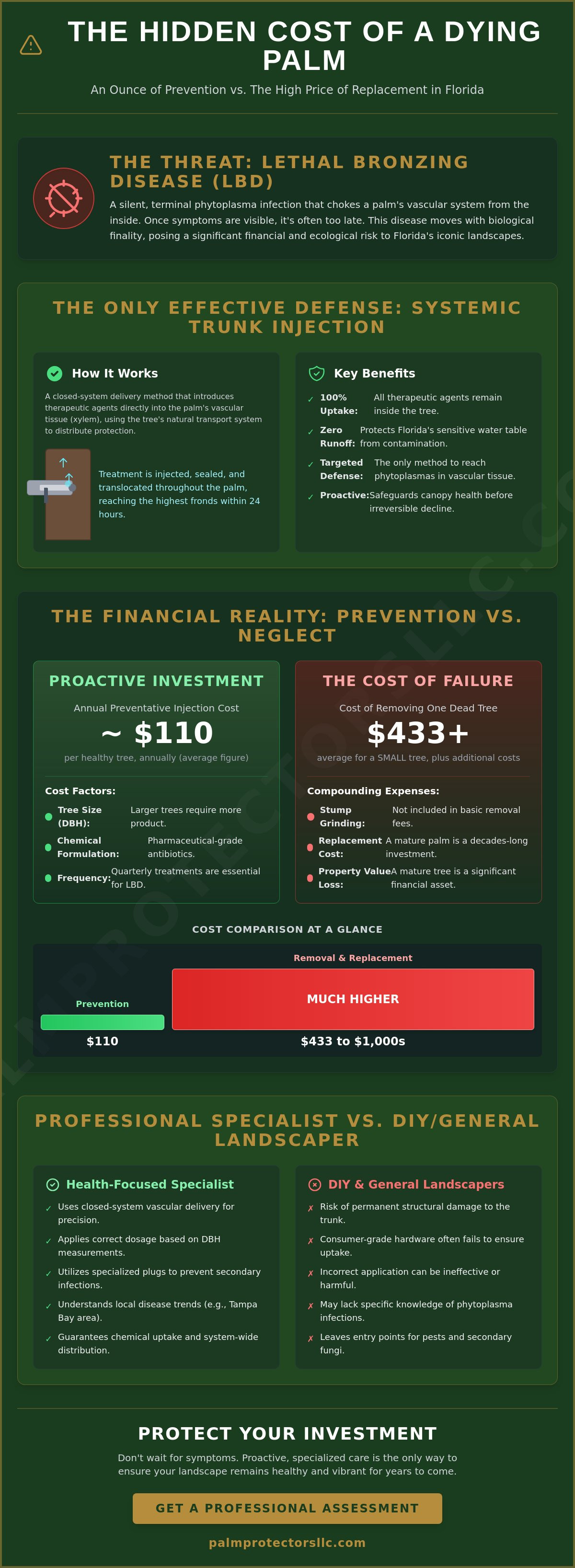
Professional Service vs. DIY: Evaluating the Real Cost of Failure
In an attempt to lower the palm tree trunk injection cost, some property owners are tempted by DIY kits available online. While the upfront hardware cost seems low, this approach ignores the immense biological and financial risks involved. Tree injection is a medical procedure, not a maintenance task, and the cost of failure is the total loss of your irreplaceable tree.
Incomplete Uptake: Consumer-grade, high-pressure injection "needles" or passive capsule systems often result in poor uptake. If the formulation is not properly absorbed into the vascular tissue, it provides a false sense of security while leaving the tree completely vulnerable.
Permanent Trunk Damage: Incorrect drilling depth is a common DIY error. Drilling too shallow fails to reach the xylem, while drilling too deep can damage the heart of the palm, causing permanent structural weakness and creating a pathway for decay.
Lack of Professional Monitoring: A key part of our service is the pre-injection assessment. Our technicians are trained to identify early, subtle symptoms of stress or disease that a homeowner would miss, ensuring the correct treatment is applied at the correct time.
Liability and Insurance: For commercial properties, HOAs, and condominiums, using unlicensed individuals to apply restricted-use chemicals is a significant liability risk. Licensed, insured contractors like Palm Protectors LLC assume that responsibility, protecting your property and investment.
The Risks of DIY Palm Injections
Attempting to replicate a professional service without the requisite training, equipment, and chemical access is fraught with peril. The potential savings are dwarfed by the risks of catastrophic failure.
Pathogen Transmission: Using the same unsterilized drill bit or injector on multiple trees is a recipe for disaster. This can easily transmit tool-borne pathogens, spreading disease from a sick tree to all the healthy ones on your property.
Sourcing Professional-Grade Antibiotics: The specific formulations of Oxytetracycline hydrochloride proven effective against LBD are generally not available to the public. They are restricted-use products intended for application by licensed professionals, meaning DIYers are often using unproven or improperly diluted substitutes.
Trunk Necrosis: Improper injection pressure from DIY devices can rupture the tree's vascular tissues, causing a localized area of cell death known as trunk necrosis. This damage is permanent and can create a weak point in the trunk for years to come.
The Advantage of Certified Technicians
Choosing a specialist from Palm Protectors LLC is an investment in certainty and peace of mind. Our focus is singular: the long-term health and preservation of your palms.
The Diagnostic Eye: During a routine LBD prevention visit, our technicians might detect the early signs of Frizzle Top (manganese deficiency) or another nutrient issue. This allows for early intervention, combining treatments and saving the tree from multiple stressors.
Precision Dosing: We adhere strictly to the latest guidelines from the Florida Department of Agriculture and the University of Florida IFAS Extension. Dosing is not a guess; it is a science based on your tree's specific species, size, and health status.
Vigilant Stewardship: Our service is more than an injection; it's a partnership. We take a vigilant, specialist approach to managing the health of your landscape assets, providing proactive guardianship so you don't have to worry.
The ROI of Prevention: Injection Costs vs. Tree Replacement
The most compelling argument for a professional injection program becomes clear when you compare the ongoing cost of preservation to the astronomical, one-time cost of failure. Lethal Bronzing is final. Once a tree is lost, the financial impact extends far beyond a simple removal fee.
Mature Palm Removal Costs: Safely removing a large, dead palm in the Tampa Bay area, especially one with limited access, can easily cost $2,000 to $4,000 or more. This is a dead-loss expense that provides zero aesthetic or financial return.
Staggering Replacement Costs: Sourcing, transporting, and professionally installing a comparable 15-foot Sylvester or Canary Island Date Palm is a massive investment. Expect to pay between $5,000 and $10,000, and often more, for a mature, field-grown specimen.
The "Legacy Gap": Even with a large replacement, it will take years, if not decades, for a new palm to achieve the same canopy size, shade profile, and aesthetic grandeur as the one you lost. This gap in maturity significantly impacts your property's immediate visual appeal.
The Financial Verdict: A typical annual injection program to protect a high-value palm costs only a fraction of the one-time, $7,000 to $14,000+ hit you would take to remove and replace it.
Calculating the Cost of Tree Loss
The invoice for a new palm is only the beginning. The secondary costs associated with losing a mature tree are substantial and often overlooked until it's too late.
Hidden Expenses: The total cost of loss must include stump grinding, repair to irrigation lines or lighting damaged during removal, and sod replacement for the affected area. These can add another $500 to $1,500 to the bill.
Impact on Property Value: Mature, healthy trees are a proven driver of property value. A sudden gap in your landscape's canopy, especially at the front of a home or commercial property, can detract from its curb appeal and overall market value.
Emotional and Environmental Cost: Beyond the financial numbers lies the loss of a living landmark. A 20-year-old palm has provided two decades of shade, air purification, and natural beauty. Its loss is an environmental and emotional deficit that no check can truly replace.
Long-term Maintenance vs. Crisis Management
The core of our philosophy is shifting property owners from a reactive, crisis-management mindset to a proactive, long-term preservation strategy. This is not only better for the trees but is also far superior for your budget.
Predictable Operating Expense: Budgeting for a preventative care program transforms palm health into a predictable, manageable annual operating expense, much like pest control or irrigation maintenance. This eliminates the risk of a sudden, five-figure crisis.
The Most Expensive Strategy: In Florida's high-risk environment for LBD, the "wait and see" approach is the most expensive strategy you can adopt. By the time you "see" the symptoms, you are already facing the full cost of removal and replacement.
Compounding Benefits: Our comprehensive programs often combine disease protection with nutrient management. This creates a compounding benefit where the tree is not only shielded from LBD but is also healthier, more robust, and better equipped to handle other environmental stressors like drought or storms.
Professional Palm Preservation in the Tampa Bay Area
When the health of your most valuable landscape assets is on the line, you need a specialist, not a generalist. Palm Protectors LLC is not a landscaping company that also treats trees. Our entire focus is on the science of palm health and the prevention of catastrophic disease. We are your property's vigilant guardians.
A Singular Focus: We focus strictly on palm health—disease prevention, nutrient management, and pest control. We do not perform landscaping, tree trimming, or removal. This specialization ensures our expertise is deep, current, and unparalleled.
Local Expertise: Serving Tampa, Pasco, Pinellas, and St. Pete, we have on-the-ground knowledge of local LBD outbreak patterns, soil conditions, and environmental factors unique to the Tampa Bay region.
Scientific Guardianship: Our commitment is to scientifically-backed protocols and proactive guardianship. We view our role as protecting the long-term health and value of your landscape, one tree at a time.
Next Steps: The first step toward securing your palms' future is a professional diagnostic assessment. We will evaluate the health of your trees, identify potential risks, and develop a customized preservation plan.
Why a Specialist Beats a Generalist
The difference between a certified palm health technician and a standard "mow and blow" landscape crew is the difference between a doctor and a barber. Both may work on the head, but the expertise and tools are worlds apart.
Diagnostic Precision: A general landscaper may not be able to differentiate the early, subtle signs of LBD from a simple magnesium deficiency. This misdiagnosis can be a fatal mistake. Our certified technicians have the diagnostic training to make the right call.
Specialized Equipment: We use professional-grade, low-pressure injection systems and formulations specifically designed for the unique vascular structure of palms and tailored to Florida's unique soil chemistry.
A Mission of Preservation: For many landscape companies, tree health is an add-on service. For us, it is our core mission. Our entire business is structured around preserving your trees, not replacing them.
Secure Your Landscape’s Future
The threat of Lethal Bronzing Disease is active and present in our communities. The time for proactive defense is now, especially during the warmer months when disease-transmitting insects are most active.
Immediate Action is Key: The window for effective preventative treatment is before the tree is infected. Immediate action during peak disease transmission seasons provides the highest level of protection.
Hands-Off Protection: Our recurring service plans provide seamless, hands-off protection for property owners and managers. We manage the treatment schedule, monitor your palms' health, and provide detailed service reports, giving you complete peace of mind.
Final Call to Intervention: Don't wait for a yellowing frond to become a death sentence. Protect your palms with professional, science-based trunk injections. Protect your palms with professional injections.
Frequently Asked Questions
How much does a single palm tree trunk injection cost on average? The cost for a single injection can range from $75 to $300+ per tree, per application. The final price depends heavily on the tree's size (DBH), the specific chemical formulation required (antibiotic vs. nutrient), and the number of trees being treated during a single visit. How often do palm trees need to be injected for Lethal Bronzing protection? For effective, continuous protection against Lethal Bronzing Disease, preventative antibiotic injections are required every three to four months (quarterly). This frequency ensures that a therapeutic level of the antibiotic remains present in the tree's vascular system. Can I buy the antibiotic and inject my own palm trees? No, we strongly advise against it. The specific Oxytetracycline formulations effective against LBD are typically restricted-use products for licensed professionals. Furthermore, improper injection technique can permanently damage or kill your tree and may spread disease to other palms. Are trunk injections safe for the tree and the environment? Yes. When performed by a certified technician, trunk injections are extremely safe. The process uses a small wound that the tree easily compartmentalizes and heals. Because it's a closed system, there is no chemical runoff, making it the most environmentally responsible method for treating systemic tree issues. What happens if I stop the injection treatments? If you discontinue a preventative LBD treatment program, the protective antibiotic levels within the tree will diminish over several months. This will leave the palm completely vulnerable to new infection by the LBD phytoplasma. Protection is only active as long as the treatment program is maintained. Do palm tree injections also provide fertilizer and nutrients? They can, but it depends on the formulation. A treatment for LBD uses an antibiotic. A separate treatment for a condition like Frizzle Top would use a formulation of manganese and other micronutrients. A comprehensive health plan may involve injections for both, but they are distinct products for distinct problems. How long does it take for the tree to absorb the injected medicine? Uptake time varies based on the tree's health, size, and current weather conditions (transpiration rate). However, most palms will absorb the full dose within a few hours, and the formulation is typically distributed systemically throughout the tree within 24 to 48 hours. Is there a guarantee that injections will save my palm tree? For Lethal Bronzing Disease, injections are strictly preventative. They are highly effective at protecting healthy trees from becoming infected. However, if a tree is already infected and showing symptoms, there is no cure, and the tree cannot be saved. This is why proactive, preventative treatment is so critical.


Comments