.png)
Pinellas County Palm Disease Treatment: A Specialist’s Guide to Preservation

Table of Contents
The Current Crisis: Palm Disease Threats in Pinellas County
For homeowners and property managers in Pinellas County, the lush, tropical canopy is more than just scenery—it's a significant financial and aesthetic asset. However, this idyllic landscape is under constant threat from microscopic invaders that can turn a vibrant, high-value palm into a liability in a matter of months. The biological reality is that our region, from St. Pete to Clearwater, has become a hotbed for aggressive palm diseases, demanding a shift in mindset from reactive gardening to proactive preservation.
Pinellas County's unique environment makes it particularly vulnerable to the spread of phytoplasma infections—bacteria-like organisms that are fatal to many of Florida's most iconic palm species. The most vulnerable and commonly planted palms, including the majestic Sylvester, the elegant Canary Island Date, and the popular Queen Palm, are at high risk. Losing one of these specimen trees is not just an aesthetic blow; it's the loss of an asset that can be valued at over $5,000, not including the additional cost of removal and replacement. Defending this asset requires specialized knowledge and preventative action.
Lethal Bronzing Disease (LBD): The Silent Killer
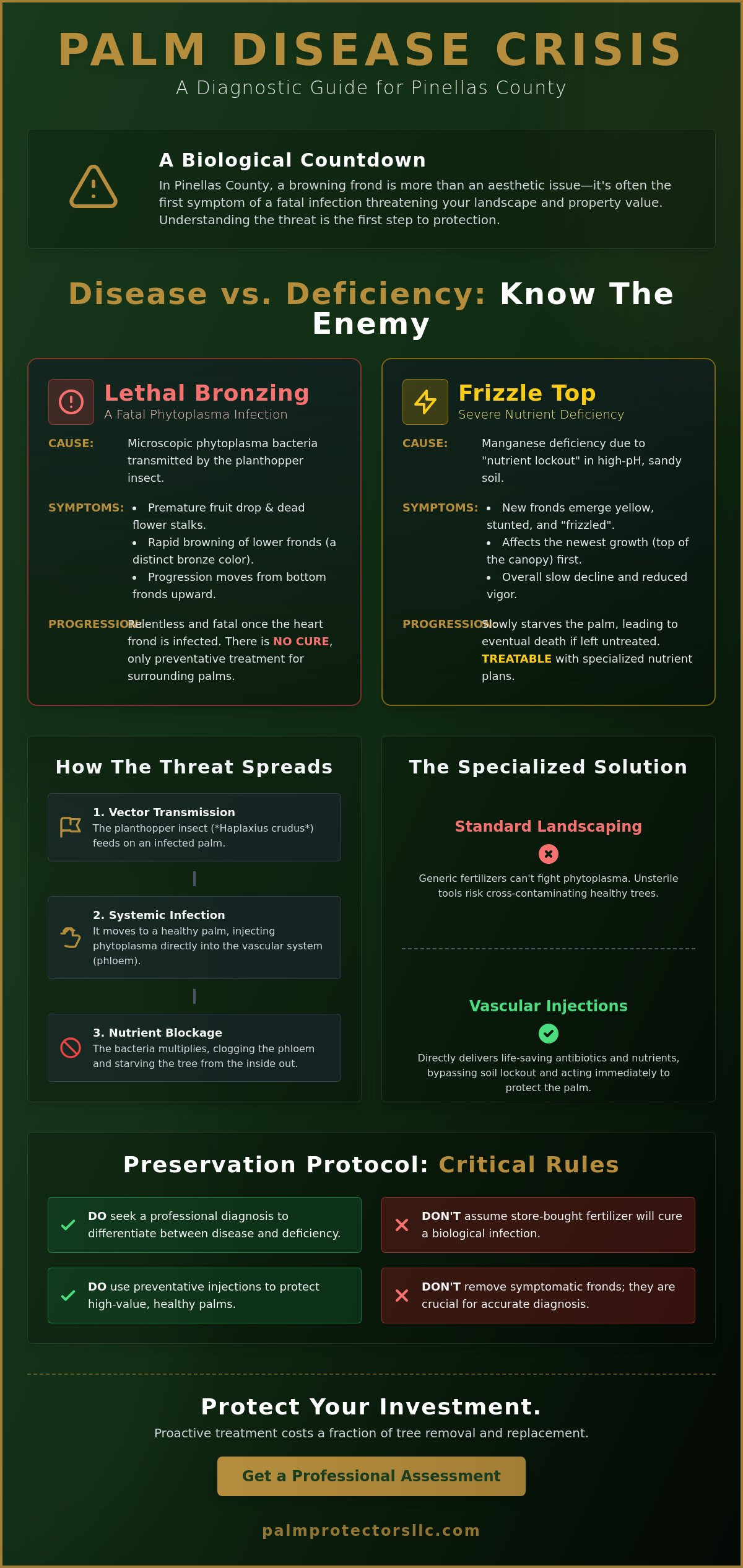
Once known as Texas Phoenix Palm Decline (TPPD), Lethal Bronzing Disease (LBD) is the primary threat to our local palms. This disease is caused by a phytoplasma, a microscopic organism that is transmitted by a tiny insect called the American palm cixiid, or planthopper (Haplaxius crudus). Once inside the palm, the phytoplasma multiplies and systematically clogs the tree’s phloem, its vital vascular tissue responsible for transporting nutrients. This internal blockage effectively starves the palm from the inside out, leading to a rapid and irreversible decline.
The visual symptoms often appear too late for any effective treatment:
Premature Fruit Drop: One of the earliest signs is a sudden, excessive drop of fruit from the palm.
Flower Necrosis: The inflorescence, or flower stalk, will turn black and die.
Bronzing Fronds: A distinctive bronze or reddish-brown discoloration begins in the lowest, oldest fronds and progresses upward through the canopy. By the time this is clearly visible, the infection is advanced and fatal.
Crucially, LBD is not a curable condition. Once a palm is symptomatic, it becomes a source of infection for neighboring trees and must be removed. The only effective "treatment" is a consistent, proactive prevention program.
Frizzle Top and Nutrient Starvation
While LBD is a fatal infection, "Frizzle Top" is a condition caused by a severe nutrient deficiency, specifically a lack of manganese. It is not a fungal or bacterial disease. This distinction is critical, as the approach to management is entirely different. In Pinellas County, our naturally sandy and high-pH (alkaline) soil often "locks up" essential micronutrients like manganese, making them unavailable for the palm's roots to absorb, even if they are present in the ground.
The primary symptom is new growth (the emerging spear leaf and subsequent fronds) that appears yellowed, stunted, and withered, giving it a "frizzled" appearance. This is the palm’s cry for specialized nutritional intervention. Applying standard fertilizer is often ineffective because the soil's pH prevents uptake. Frizzle Top requires a targeted approach to bypass the soil problem and deliver the necessary nutrients directly to the plant.
Diagnostic Depth: Is it Disease, Deficiency, or Decay?
The most dangerous mistake a property owner can make is misdiagnosing the cause of a declining palm. Applying a manganese treatment for Frizzle Top to a palm infected with Lethal Bronzing is a waste of time and money, and it allows the disease to progress to a fatal stage. Conversely, assuming a frizzled Queen Palm has an incurable disease might lead to its unnecessary removal when a simple nutrient adjustment could have restored its vigor.
Accurate diagnosis is the cornerstone of any effective palm preservation strategy. Our local environment complicates things; the high pH of our soil is a direct cause of nutrient deficiencies, which can mask or mimic the early signs of a fatal disease. Furthermore, a common but misguided practice is to prune browning or yellowing fronds for aesthetic reasons. This removes critical diagnostic evidence that a specialist uses to determine the nature, direction, and speed of the decline. The vector for LBD, the planthopper (Haplaxius crudus), thrives in our climate, actively spreading the phytoplasma from infected to healthy palms, making early and accurate identification more urgent than ever.
Visible Signs of Lethal Bronzing
Identifying LBD requires a trained eye looking for a specific pattern of decline. While a laboratory test is the only way to be 100% certain, a field diagnosis by a specialist is based on these key indicators:
The "Spear Leaf" Test: The spear leaf is the new, unopened frond at the very top center of the palm. In an LBD infection, this spear leaf will die and turn brown while the surrounding fronds are still green. This is a definitive sign that the palm's heart, or apical meristem, is dead and the tree cannot be saved.
Progressive Bronzing: The discoloration is not random. It starts with the lowest fronds and moves methodically up the canopy. This upward march of a single, uniform color is a hallmark of LBD, distinguishing it from the patchy yellowing of potassium deficiency.
Timeline of Decline: An infected but asymptomatic palm can decline and die within 4 to 6 months. The speed of this collapse is another key indicator of a systemic infection rather than a slower-moving nutritional issue.
Identifying Nutritional Famine
Nutrient deficiencies present a different set of symptoms that, while serious, are often correctable with a specialized management plan. A specialist can differentiate between them to create a targeted "Vigor Restoration" process.
Manganese vs. Potassium Deficiency: Frizzle Top (Manganese) affects the newest leaves first, causing them to emerge small and necrotic. In contrast, Potassium deficiency, the most common deficiency in Florida palms, causes yellow spotting and necrotic tips on the oldest leaves first.
Symptom Location: The location of the symptoms in the canopy is the most important clue. Problems with new growth point to immobile nutrients like Manganese or Boron. Problems with old growth point to mobile nutrients like Nitrogen or Potassium.
The "Vigor Restoration" Process: For a starving palm, a specialist program involves bypassing the poor soil conditions. This can include targeted granular treatments with specific micronutrient packages and foliar sprays that allow the palm to absorb nutrients directly through its fronds, providing immediate relief while long-term soil amendments take effect.
Specialized Medicine vs. Standard Landscaping
Understanding the threats to your palms is only half the battle. The other half is choosing the right professional to implement a prevention strategy. A standard "mow and blow" landscaping crew, while excellent for lawn maintenance, typically lacks the diagnostic training, specialized equipment, and chemical licensing required for clinical palm healthcare. In fact, they can inadvertently spread disease, like Ganoderma butt rot, through contaminated pruning tools.
Effective palm preservation is a form of arboricultural medicine. It relies on a deep understanding of pathology, entomology, and soil science. A licensed and insured palm health specialist operates like a doctor, focusing on a program of diagnostics, preventative injections, and systemic treatments designed to protect the palm's vascular system from the inside out.
Trunk Injection Technology
For Lethal Bronzing, the only proven preventative measure is the direct vascular injection of an antibiotic, Oxytetracycline hydrochloride. This is a precise medical procedure for a high-value tree.
The Process: A specialist drills a small number of carefully placed holes at the base of the trunk and uses a pressurized system to infuse the antibiotic directly into the palm's xylem and phloem. This ensures the protective compound is delivered throughout the entire tree.
The Only Proven Preventative: Surface sprays are completely ineffective against an internal phytoplasma. Trunk injections are the only method recognized by the University of Florida IFAS Extension to successfully prevent LBD in susceptible palms.
Frequency of Prevention: To maintain a protective barrier, these injections must be administered on a consistent schedule, typically every 90 to 120 days, especially for high-risk species in areas with known LBD outbreaks.
Root Drenching and Systemic Insecticides
A comprehensive prevention strategy must also target the vector that spreads the disease. Breaking the cycle of infection means controlling the planthopper population. This is achieved not with ineffective contact sprays, but with long-lasting systemic treatments.
Systemic Protection: A specialist will apply a systemic insecticide to the soil at the base of the palm. The roots absorb the product and transport it throughout the tree's vascular system, from the trunk all the way to the tips of the fronds.
Targeting the Vector: When a planthopper feeds on a protected palm, it ingests the insecticide and is eliminated, preventing it from spreading LBD to other trees. This creates a protective shield for your entire landscape.
Long-Term Defense: Unlike contact pesticides that wash away, systemic treatments provide continuous protection for months, forming a crucial part of a year-round disease prevention calendar.
The Pinellas County Palm Care Calendar
A successful preservation strategy is not a one-time event; it's a year-round commitment tailored to the specific challenges of the Pinellas County climate and its local ordinances. A generic, one-size-fits-all approach will fail to protect your palms effectively.
Navigating the Pinellas County Summer Fertilizer Ban, which runs from June 1st to September 30th, is a key example. During this period, the application of fertilizers containing nitrogen or phosphorus is prohibited to protect our local waterways. However, your palms' health needs don't stop for the summer. A specialist knows how to work within these regulations to keep your palms healthy, focusing on micronutrients and preventative disease and insect control. Quarterly monitoring, especially for high-value specimen palms, is essential for catching early signs of stress and adjusting the prevention plan accordingly.
Summer Ban Compliance
The rainy season is a period of rapid growth and high stress for palms, making them more susceptible to both disease and deficiencies. A compliant yet effective summer program is critical.
Focus on Micronutrients: During the ban, we focus on applying essential micronutrients like manganese and magnesium, which are not restricted and are vital for preventing conditions like Frizzle Top.
Maintain Health Without Violating Ordinances: By using compliant products, a specialist can maintain the palm's vigor and color without contributing to nitrogen runoff.
Insect and Disease Prevention: Summer is peak season for insect activity, including the LBD-carrying planthopper. Systemic insecticide applications and preventative injections are the primary focus during this critical window.
Year-Round Disease Screening
Palm health is a 365-day-a-year concern. Each season brings different challenges and requires a different focus for a vigilant prevention program.
Spring: This is the most critical window to begin a preventative program for Lethal Bronzing before planthopper populations surge in the summer heat. It's the time for the first trunk injections of the year.
Autumn: As the humidity remains high, we monitor for secondary threats like whitefly and scale insects, which can stress the palm and make it more vulnerable to other issues.
Winter: We focus on strengthening palms with potassium and magnesium to help them withstand cold snaps, which can induce nutrient lockout and cause stress that mimics disease symptoms.
Preservation Strategy: Partnering with Palm Protectors LLC
The cost of a proactive preservation program is a small fraction of the expense associated with the removal of a dead palm and the purchase and installation of a mature replacement. Our mission at Palm Protectors LLC is to serve as vigilant guardians of Florida's iconic canopy. We are not general landscapers; we are palm doctors. Our focus is singular: applying the science of arboricultural medicine to prevent disease and ensure the long-term health of your most valuable landscape assets.
Your journey to securing your palms begins with an initial diagnostic consultation. A specialist will visit your property, assess the health of each individual palm, identify potential risks, and develop a customized, science-based preservation plan tailored to your landscape and budget.
Lethal Bronzing Protection Service
Our premier service is a comprehensive prevention program designed to shield high-risk species like the Sylvester, Canary Island Date, and Bismarck Palm from a confirmed threat. Our protocol involves the precise, scheduled application of trunk-injected antibiotics and systemic insecticides to create a robust, multi-layered defense against LBD infection and transmission.
Nutrient Management and Frizzle Top Repair
We combat nutrient deficiencies at their source. Our nutrient management programs utilize targeted fertilizer treatments, soil amendments, and micronutrient applications designed to bypass the limitations of Pinellas County's sandy, alkaline soil. We can restore vigor and lush green color to palms suffering from Frizzle Top and other common deficiencies, ensuring they have the strength to thrive.
Protect your palms with a specialist consultation
Frequently Asked Questions
Is Lethal Bronzing curable once a palm tree shows symptoms? No. Once a palm shows confirmed symptoms of Lethal Bronzing, such as a dead spear leaf or the upward progression of bronzing fronds, it is considered fatal and cannot be saved. This is why a proactive prevention program is the only effective strategy. How much does palm tree trunk injection cost in Pinellas County? The cost of trunk injection varies based on the size (diameter) of the palm's trunk and the number of trees being protected. A preventative program is significantly less expensive than the cost of removing a dead palm and replacing it. What is the difference between Lethal Yellowing and Lethal Bronzing? Both are fatal diseases caused by phytoplasmas, but they are distinct strains. Lethal Yellowing (LY) primarily affects coconut palms and other specific species. Lethal Bronzing (LBD) affects a different, wider range of palms common in Pinellas, including Sylvester, Queen, and Canary Island Date Palms. The symptoms are also different, with LY causing a distinct yellowing of the fronds. Can my regular landscaper provide Lethal Bronzing protection? Typically, no. Effective LBD prevention requires specific diagnostic training, state licensing to purchase and apply the necessary products (restricted-use pesticides and antibiotics), and specialized injection equipment. It is a form of technical arboriculture that falls outside the scope of standard landscape maintenance. Which palm species in St. Pete are most at risk for disease? The most susceptible species to Lethal Bronzing in St. Pete and throughout Pinellas County are Phoenix species (like Sylvester, Canary Island Date, and Edible Date palms), Sabal palmetto (our state tree), and Queen Palms. How often should I fertilize my palms according to Pinellas County rules? You should use a slow-release, palm-specific fertilizer (like an 8-2-12+4Mg formulation) two to three times per year during the designated fertilizing seasons (spring and fall). No fertilizer containing nitrogen or phosphorus can be applied between June 1 and September 30. Why are the new leaves on my Queen Palm coming out small and frizzled? This is a classic symptom of "Frizzle Top," which is a manganese deficiency. It is very common in Queen Palms and Sabal palms planted in the alkaline soils of Pinellas County. This is a correctable condition that requires specialized micronutrient treatments. Can Lethal Bronzing spread from my neighbor’s tree to mine? Yes. The disease is spread by the planthopper insect, which can fly from an infected tree to a healthy one. If LBD is present in your neighborhood, your susceptible palms are at high risk and should be placed on a preventative program immediately.


Comments